Banking and Salary Setup Tips for Newcomers in Jeddah
Moving to Jeddah for work can be both exciting and overwhelming, especially when it comes to managing your finances in a new country. Whether you’re relocating for a corporate position or starting fresh in Saudi Arabia’s commercial capital, understanding the local banking system and salary setup is crucial for a smooth transition. This comprehensive guide will help you navigate Jeddah’s financial landscape with confidence and set yourself up for success from day one.
Understanding Jeddah’s Banking Landscape
Jeddah, as Saudi Arabia’s commercial hub and gateway to the holy cities, hosts numerous local and international banks that cater to expatriates and locals alike. The city’s banking sector is well-developed, offering modern services that align with both Islamic banking principles and conventional banking practices.
Major banks like Al Rajhi Bank, Saudi National Bank (SNB), Riyad Bank, and international institutions such as HSBC and Citibank have established strong presences in the city.
The Saudi Arabian Monetary Authority (SAMA) regulates all banking activities, ensuring security and transparency in financial transactions. Most banks in Jeddah offer services in both Arabic and English, making it easier for international newcomers to navigate their banking needs.
Tip 1: Choose the Right Bank for Your Needs
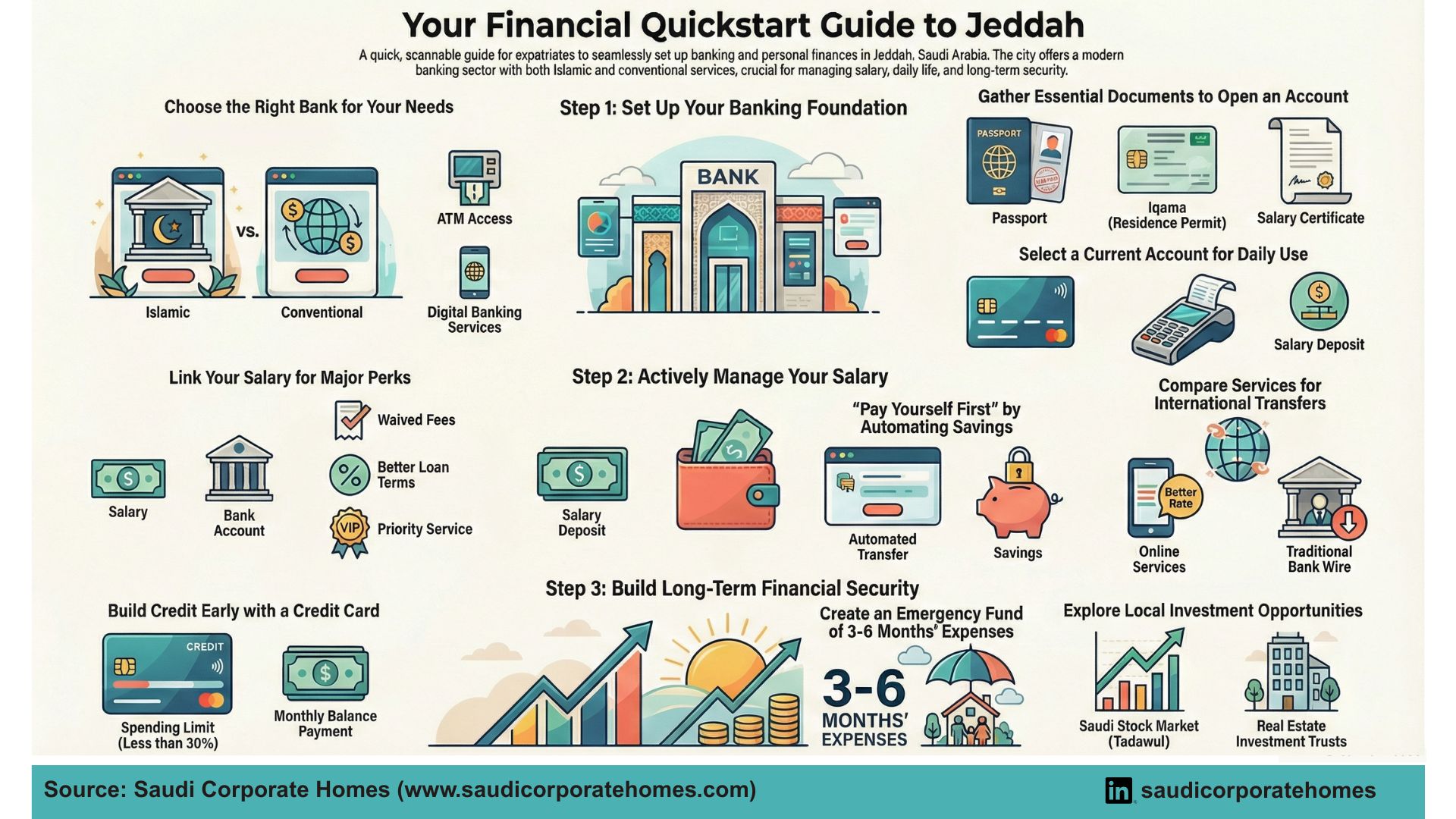
Selecting the appropriate bank is your first crucial step toward financial stability in Jeddah. Consider these factors when making your decision:
Islamic vs. Conventional Banking: Saudi Arabia operates primarily on Islamic banking principles (Sharia-compliant), which prohibits interest (riba) and focuses on profit-sharing arrangements. However, some banks offer conventional banking services for non-Muslim expatriates.
Salary Transfer Requirements: Many banks require a minimum salary transfer to open certain types of accounts. Typically, this ranges from SAR 3,000 to SAR 5,000 monthly. Higher salary transfers often unlock premium banking services and better terms.
Branch Network and ATM Accessibility: Choose a bank with extensive ATM networks and branches near your workplace and residence. This ensures convenient access to banking services without additional fees.
Digital Banking Services: Modern banks in Jeddah offer comprehensive mobile and online banking platforms. Look for banks with user-friendly apps that support multiple languages and offer 24/7 customer service.
International Transfer Capabilities: If you need to send money abroad regularly, compare exchange rates and transfer fees across different banks. Some institutions offer preferential rates for salary account holders.

Tip 2: Master the Account Opening Process
Opening a bank account in Jeddah requires specific documentation and procedures. Being prepared can save you multiple trips to the bank:
Required Documents:
- Valid passport with entry visa
- Iqama (residence permit) – though some banks accept salary certificates for immediate account opening
- Salary certificate from your employer (stating monthly income)
- No-objection letter from your sponsor/employer
- Initial deposit (varies by bank and account type)
Account Types to Consider:
- Current Account: Ideal for daily transactions and salary deposits
- Savings Account: Offers profit-sharing (Islamic) or interest (conventional) on deposits
- Fixed Deposit Account: Higher returns for locked-in funds over specific periods
Pro Tips for Account Opening:
- Visit during weekdays and early morning hours to avoid crowds
- Bring multiple copies of all documents
- Ask about account packages that include credit cards, insurance, and other benefits
- Inquire about waived fees for the first year, which many banks offer to attract new customers
Tip 3: Optimize Your Salary Setup and Direct Deposits
Setting up your salary efficiently can significantly impact your financial management in Jeddah:
Salary Transfer Benefits: Banks offer numerous advantages for salary transfer customers, including:
- Waived monthly account maintenance fees
- Free checkbooks and debit cards
- Preferential loan and credit card terms
- Higher ATM withdrawal limits
- Priority customer service
Multi-Account Strategy: Consider opening multiple accounts for different purposes:
- Primary account for salary deposits and monthly expenses
- Savings account for emergency funds and future goals
- Investment account for long-term wealth building
Automatic Transfers: Set up automatic transfers to move predetermined amounts to savings or investment accounts immediately after salary deposits. This “pay yourself first” approach ensures consistent saving habits.
Standing Instructions: Establish standing instructions for recurring payments like rent, utilities, and insurance premiums. This prevents late payment fees and maintains good credit standing.
Tip 4: Navigate Currency Exchange and International Transfers
Managing currency exchange effectively can save substantial money over time:
Understanding Exchange Rates: Saudi Riyal (SAR) is pegged to the US Dollar, providing stability. However, rates for other currencies fluctuate daily. Monitor rates through banking apps or financial websites.
Transfer Options:
- Bank Wire Transfers: Secure but often expensive with higher fees
- Online Money Transfer Services: Companies like Wise, Remitly, or Western Union often offer better rates
- Exchange Houses: Licensed exchange companies in Jeddah sometimes provide competitive rates for cash transactions
Timing Your Transfers: Exchange rates fluctuate throughout the day. Many experienced expatriates track rates and transfer money during favorable periods.
Tax Implications: Understand the tax implications in both Saudi Arabia and your home country. Saudi Arabia doesn’t impose personal income tax on most expatriates, but your home country may have reporting requirements.
Tip 5: Build Credit History and Financial Security
Establishing a strong financial foundation in Jeddah sets you up for long-term success:
Credit Card Strategy: Apply for a credit card early to build credit history. Start with a basic card and demonstrate responsible usage:
- Keep credit utilization below 30% of your limit
- Pay full balances on time every month
- Gradually request limit increases as your salary and relationship with the bank improve
Emergency Fund Building: Aim to save 3-6 months of expenses in an easily accessible account. Jeddah’s cost of living varies significantly based on lifestyle choices, but having financial cushion provides peace of mind.
Investment Opportunities: Once settled, explore investment options:
- Bank investment products (mutual funds, structured products)
- Saudi stock market (Tadawul) through brokerage accounts
- Real estate investment trusts (REITs)
- Gold and precious metals (popular in Saudi culture)
Insurance Planning: Secure appropriate insurance coverage:
- Health insurance (often provided by employers but verify coverage)
- Life insurance for family protection
- Auto insurance (mandatory for vehicle owners)
- Home contents insurance for valuable possessions
Additional Financial Considerations for Jeddah Newcomers
Cost of Living Awareness: Jeddah’s cost of living varies dramatically based on location and lifestyle. Premium areas like Al-Hamra, Al-Shati, and compounds can be expensive, while other neighborhoods offer more affordable options.
Seasonal Financial Planning: Consider Islamic holidays and their impact on banking services. During Ramadan and Hajj seasons, banking hours may change, and some services might be limited.
Cultural Financial Practices: Understanding local customs around money management, charitable giving (Zakat), and business relationships can help you integrate better into the community.
Legal and Regulatory Compliance: Stay informed about Saudi Arabia’s evolving financial regulations, especially those affecting expatriate workers and international transfers.
Conclusion and Next Steps
Successfully managing your finances in Jeddah requires preparation, research, and strategic thinking. By choosing the right bank, understanding account options, optimizing your salary setup, managing currency exchanges effectively, and building strong credit history, you’ll establish a solid financial foundation for your life in Saudi Arabia’s commercial capital.
Remember that financial success in Jeddah isn’t just about banking – it’s also about finding the right living situation that fits your budget and lifestyle. Just as you need reliable banking services, you need trustworthy housing and relocation support to make your transition smooth and stress-free.
If you need comprehensive housing solutions, relocation assistance, or supportive services to complement your financial planning in Jeddah, contact the Saudi Corporate Homes team. Our experienced professionals understand the unique challenges newcomers face and provide tailored solutions to ensure your successful integration into Jeddah’s dynamic business community. Let us help you find the perfect home that aligns with your financial goals and lifestyle preferences.

Manahil Farooq or Manoo, transform complex local knowledge into clear, compelling articles for businesses focused on Saudi Arabia. Her specialty? Writing about the dynamic sectors of Jeddah and Riyadh, from top company analysis to the intricate details of relocation and housing. She believe great articles should feel like the ultimate, most helpful guide.if you need help let’s connect.