
Cultural Integration and Workplace Adaptation: Preparing US Employees for Professional Life in Saudi Arabia
Cultural integration and workplace adaptation are now critical success factors for US employees relocating to Saudi Arabia, especially as more international companies expand under Vision 2030 and the Regional Headquarters program. HR leaders who proactively prepare assignees for Saudi business culture, social norms, and daily life see smoother onboarding, higher engagement, and fewer early-return risks.
Understanding Saudi Professional Culture
Saudi workplaces blend modern corporate practices with values shaped by Islamic principles and local traditions. Respect, hierarchy, and relationship-building are central, which can feel different to US employees accustomed to more informal, individualistic environments.
Key characteristics HR should highlight include:
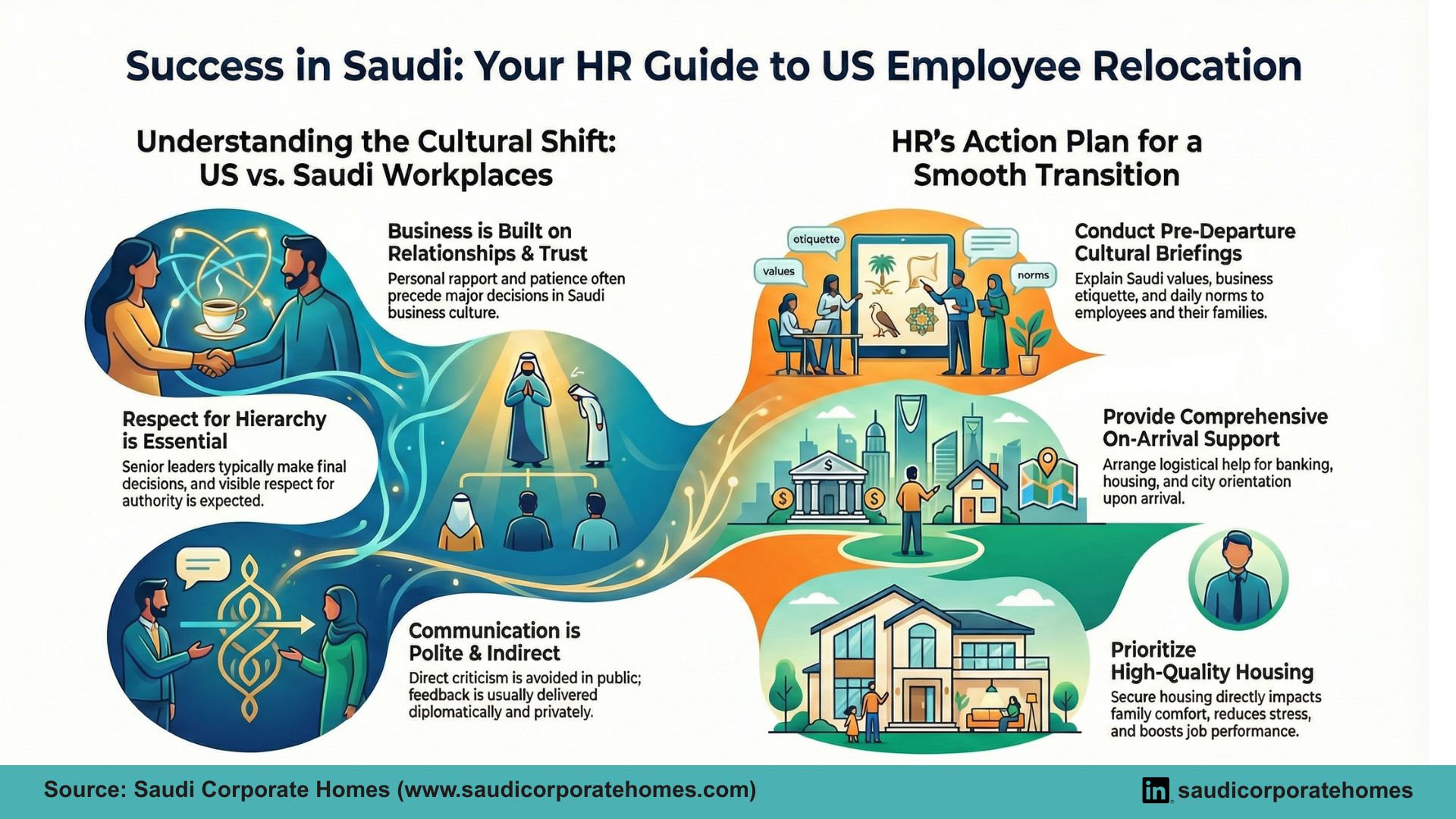
- Relationship-driven business: Trust and personal rapport often precede major decisions, so patience and regular in-person interactions are important.
- Hierarchical decision-making: Senior leaders tend to make final calls, and visible respect for authority is expected in meetings and communications.
- Politeness and indirect feedback: Direct criticism in public can be poorly received; feedback is often delivered in a more diplomatic and private way.
Everyday Workplace Norms US Employees Must Know
Saudi Arabia has made substantial reforms in recent years, modernizing workplaces while retaining clear cultural boundaries, especially around religion and modesty. US employees who understand these norms early adapt faster and avoid unintentional missteps.
Key norms to address in pre-departure briefings:
- Workweek and hours: Many organizations operate Sunday–Thursday, with Friday as the main weekly day of prayer and rest.
- Prayer times: Meetings may be scheduled around daily prayers, and employees should respect short pauses during the workday.
- Dress code: Business attire tends to be modest; men generally wear suits or business-casual, while women choose professional clothing that covers shoulders, chest, and legs, even in international firms.
- Mixed-gender workplaces: Mixed environments are now common in many sectors, but professional boundaries and respectful behavior remain essential.
Cultural Integration Beyond the Office
Successful assignments depend as much on life outside the office as on performance at work. Housing, transportation, family life, and social integration all affect how quickly US employees feel at home in Saudi Arabia.
HR can support integration through:
- Neighborhood and housing choices: Selecting communities that balance comfort, safety, and access to services, schools, and recreation helps reduce stress for assignees and their families.
- Orientation on local customs: Basic knowledge of Ramadan practices, public behavior expectations, and social etiquette builds confidence and shows respect for the host culture.
- Community and networking: Encouraging participation in professional networks and expat or mixed social groups provides support and accelerates cultural learning.

Practical Steps HR Can Take Before Relocation
HR managers in the US and Saudi Arabia can work together to design a structured integration pathway for each relocating employee. This transforms relocation from a purely logistical project into a strategic talent investment.
Recommended actions:
- Pre-assignment briefing
- Provide cultural awareness sessions that explain Saudi values, communication styles, and business etiquette in practical, scenario-based terms.
- Include spouses and dependents where possible, since their adjustment strongly influences assignment success.
- Policy and package design
- Align housing, schooling, transportation, and home-leave benefits with role seniority and family configuration to minimize friction.
- Build flexibility to adapt support during the first year as the employee’s needs become clearer.
- On-arrival and ongoing support
- Arrange airport meet-and-greet, local SIM and banking assistance, city orientation, and support with government portals and documentation.
- Pair new arrivals with internal buddies or mentors who already understand both US and Saudi work cultures.
How Saudi Corporate Homes Supports Cultural and Workplace Adaptation
Saudi Corporate Homes focuses on much more than just housing; the team helps companies create a stable, supportive foundation for relocated employees across Saudi Arabia. By combining thoughtfully selected corporate accommodation with guidance on neighborhoods, services, and daily life, they help reduce the stress and uncertainty that often comes with international moves.
For HR managers, this means less time troubleshooting housing and settling-in issues and more time focusing on strategic workforce planning. With a partner that understands both corporate expectations and local realities, US employees can transition into Saudi professional life with confidence and clarity.
If your company is planning to move to Saudi Arabia or relocate US-based employees there, visit saudicorporatehomes.com to connect with the Saudi Corporate Homes team and design a relocation and housing strategy that supports cultural integration and workplace success from day one.
General FAQs
Saudi workplaces place stronger emphasis on hierarchy, formality, and relationship-building than many US environments. Decisions often move through senior leadership, and cultivating trust through respectful, patient engagement is essential.
Communication tends to be polite and sometimes indirect, especially when dealing with disagreement or criticism. Public confrontation is discouraged, so sensitive topics are usually handled privately and diplomatically. are set up for success.
US employees do not need to wear traditional Saudi attire, but modest, professional clothing is expected in most corporate settings. This generally means covered shoulders and legs, avoiding overly tight or revealing outfits for both men and women.
Structured pre-departure briefings, realistic expectation-setting, and clear information about daily life help reduce anxiety and surprises. Providing strong housing support and on-the-ground assistance during the first months further minimizes culture shock. while ensuring assignees
Housing directly affects commute times, family comfort, and overall stress levels, all of which influence job performance and retention. When employees feel safe and settled at home, they adapt more easily to new workplace expectations and routines.
Saudi Corporate Homes can help identify appropriate housing, coordinate move-in logistics, and guide employees through their first weeks of life in Saudi Arabia. This integrated support allows HR managers to focus on strategic talent priorities

Manahil Farooq or Manoo, transform complex local knowledge into clear, compelling articles for businesses focused on Saudi Arabia. Her specialty? Writing about the dynamic sectors of Jeddah and Riyadh, from top company analysis to the intricate details of relocation and housing. She believe great articles should feel like the ultimate, most helpful guide.if you need help let’s connect.