
Most Common Questions: Seamless Housing Solutions for Their Expat in Saudi
Managing housing arrangements for expatriate employees in Riyadh requires specialized knowledge of local regulations, cultural considerations, and the unique challenges that come with relocating international talent to Saudi Arabia.
HR professionals tasked with this responsibility must navigate complex lease agreements, understand iqama requirements, ensure Ejari registration compliance, and select neighborhoods that align with their employees’ lifestyle needs and work locations.
The process can be overwhelming, especially for those unfamiliar with Riyadh’s real estate market and the specific documentation requirements for foreign nationals.
Fortunately, comprehensive guidance is available to streamline this process and help HR departments provide seamless housing solutions for their expat workforce.
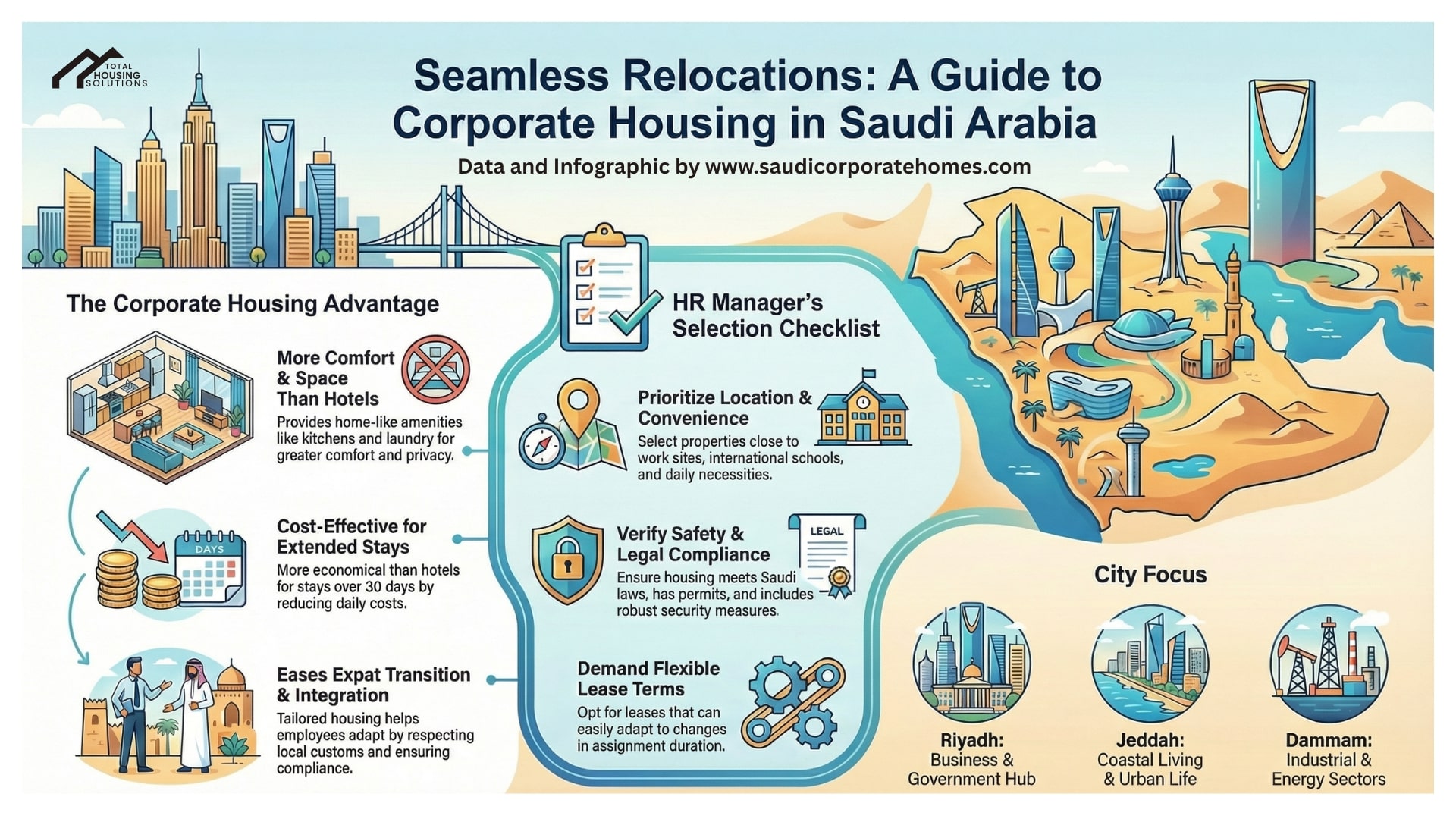
A detailed guide specifically designed for HR professionals managing expat workers covers everything from contract negotiations and legal compliance to neighborhood selection and move-in coordination. This resource addresses common challenges, provides practical tips for document preparation, explains the importance of Ejari registration, and offers insights into popular expat-friendly districts like King Abdullah Financial District, Olaya, and Al Malqa.
Frequently
Asked Questions
Yes, there is a guide for renting apartments in Riyadh for HR professionals managing expat workers on the Saudi Corporate Homes website. It contains all the necessary tips and instructions for HR. You can find it by searching on Google for www.saudicorpatehomes.com.
You can review the contract with the help of your HR department. They will guide you step by step on how to carefully read and understand all the terms and conditions of the contract. Do not sign the contract without reading it thoroughly. Always be cautious when signing.
Most lease contracts specify who is responsible for paying utilities. It is important to read the terms and conditions carefully so expats understand their responsibilities. Usually, tenants are responsible for these payments.
Yes, foreign nationals who want to work in Saudi Arabia must have a valid iqama. Only with a valid iqama can you sign and execute lease agreements. Also, make sure to sign contracts only with trusted agencies or companies that have a strong reputation and understand Riyadh’s rules and regulations.
For legal protection of both parties, all rental contracts must be registered with the Ministry of Housing’s electronic system, Ejari. This prevents disputes between workers and HR by providing legal protection.
Expats prefer living in King Abdullah Financial District because many corporate offices are located there, making it convenient for travelers and executives. Additionally, the area offers diverse leisure activities, making it a popular choice.
Both areas have pros and cons. Younger expats looking for elegant apartments near offices and entertainment venues may prefer Olaya. However, small families with children might find Al Malqa better due to its easy access to schools.
Expats should carry their iqama, passport, and employment contract at all times for quick lease processing.
It is advisable to tour your apartment before moving in so you can identify any issues and communicate them to HR. This helps avoid future disputes and ensures you know exactly where you will be living.
It is recommended to use housing services from trusted local agents who specialize in expat housing needs. Make sure to find a suitable apartment before the employee’s arrival so you have time to make any necessary changes, such as furnishing or lease negotiations.
Ready to simplify your expat housing management? Visit Saudi Corporate Homes at www.saudicorporatehomes.com for expert assistance with all your corporate housing needs in Riyadh.
Our team specializes in providing turnkey housing solutions that ensure your expatriate employees feel welcomed, comfortable, and ready to contribute to your organization from day one.
Read Another Article from our Writers

Manahil Farooq or Manoo, transform complex local knowledge into clear, compelling articles for businesses focused on Saudi Arabia. Her specialty? Writing about the dynamic sectors of Jeddah and Riyadh, from top company analysis to the intricate details of relocation and housing. She believe great articles should feel like the ultimate, most helpful guide.if you need help let’s connect.